

Human Rights and Non-Discrimination
The Company recruits employees with consideration to human rights and non-discrimination in any form, whether due to gender, age, religion, nationality, race, class or disability. The Company has a policy of recruiting from internal personnel through the process of job modification or transfer of work lines in order to foster advancement and growth among employees. For outsourcing, the Company recruits personnel according to the specific job duties for each position, along with measure of EQ or emotional intelligence in order to get employees who are good and competent, suitable for the job position whereby the necessary recruitment details are specified in full through various channels such as the Company’s website, various job search websites, open admission to universities and recruitment in provincial job fairs so that interested parties can choose to apply for the desired position equally.
Furthermore, the Company places significant emphasis on generating economic value for communities in its operational areas through fair and responsible local employment practices (GRI 202). The Company prioritizes hiring workforce from local communities to promote income distribution, reduce inequality, and support sustainable local economic development. In the year 2025, local personnel accounted for 69 percent of the Company’s total workforce. Additionally, senior management positions are filled by individuals from operational areas at appropriate proportions, reflecting the Company’s commitment to creating long-term employment opportunities and strengthening the bond between the Company and local communities.
With respect to hiring foreign workers, the Company complies with the law and follows the procedure in accordance with the requirements on recruiting migrant workers from neighboring countries, as well as adopting selection methods, with evaluation of the recruiting agencies and recruiting procedures thereof. The Company also conducts an audit of legal and regulatory compliance in this matter by the Quality System Department once a year.
- Defining the Scope of Assessment
The company has clearly defined the scope of its comprehensive human rights due diligence process to cover all relevant stakeholders, including at-risk and vulnerable groups such as children, persons with disabilities, women, minorities, migrants, third-party contract workers, indigenous peoples, local communities, LGBTQ+ individuals, the elderly, and pregnant women. This assessment applies to all operational areas where the company conducts business or has management control, as well as stakeholders within the supply chain.
The company considers key human rights issues, including labor rights, community and minority rights, supply chain rights, security and safety, environmental protection, and the rights of customers and consumers.
- Identifying Relevant Human Rights Issues
The company reviews various human rights risk issues across the entire value chain, including both direct activities conducted by the company and indirect activities through business partners, contractors, or joint ventures that may lead to human rights violations. Additionally, the company analyzes human rights trends within the same industry at a global level and categorizes similar issues to develop and update the comprehensive Human Rights Risk Assessment checklist.
Relevant departments are assigned to identify and assess potential human rights risks arising from business operations, ensuring a thorough evaluation of human rights impacts.
The scope of the company's human rights risk and impact assessment
Labor Rights Local Community and Indigenous Rights Supply Chain Rights Security and Safety Rights Environmental Rights Customers and consumers Rights - Ensuring freedom of association
- Elimination of forced labor
- Abolition of all forms of child labor
- Non-discrimination
- Welfare and social security
- Participation in organizational transparency
- Protection of local community rights
- Listening to opinions and participating in community development
- Community impact assessments
- Support gender equality and gender identity inclusion
- Compliance with the Business Code of Conduct for Partners on ESG Issues
- Relevant safety standards in products or services
- Protection and prevention of intellectual property infringement
- Workplace safety and occupational health standards
- Hazardous material management
- Personal data protection
- Respectful use of water resources
- Waste management
- Respectful use of energy resources
- Pollution management
- Respect for biodiversity
- Reducing impacts that contribute to climate change
- Protection of health and safety rights of products
- Human Rights Risk Assessment
The company incorporates human rights risk issues identified in the comprehensive Human Rights Due Diligence checklist as a tool for risk assessment. A Risk Matrix is used as the assessment tool, considering the risk level of impacts and the likelihood criteria of occurrence for each human rights issue.
 ALabor Rights1Freedom of association and protection of the right to collective bargaining2Elimination of all forms of forced or compulsory labor3Abolition of child labor and elimination of the worst forms of child labor4Elimination of discrimination in respect of employment and occupation5Provision of social welfare and social security6Participation of employees and stakeholders in organizational transparencyBRights of Local and Indigenous Communities7Protection of the rights of local communities8Protection of the rights of minority groups9Support for gender and sexual equality throughout the value chainCSupply Chain10Policies / Governance11Responsible water use and environmental respect12Pollution, waste, and waste management for environmental protection13Energy use with environmental respect14Respect for biodiversity15Mitigation of climate change impacts16Business conduct respecting freedom of association and collective bargaining rights17No use of forced or compulsory labor in business conduct18No use of child labor or worst forms of child labor in business conduct19Business conduct with equality, non-discrimination, and fairness20Safe and healthy working conditions for employees21Provision of legal welfare and social security to employees22Respect for gender and sexual equality in business conduct23Respect for and protection of local community rights24Protection of personal rights and personal data25Protection against intellectual property rights violations26Safe and standardized products/services production or service deliveryDRight to Security and Safety27Safe and healthy work environment28Hazardous materials management29Protection of personal data securityEEnvironmental Rights30Water management31Waste management32Energy management33Pollution management34Risk assessment of impacts on biodiversity35Risk assessment of impacts from climate changeFCustomer and Consumer Rights36Protection of health and safety rights regarding products
Residual Risk Rating Existing Control Assessment Control, Monitoring, and Mitigation Plan Extremely High - The existing risk control measures still have "limitations" in effectively keeping risks at an acceptable level.
- Unacceptable risk level
- It is "necessary" to urgently manage the risk to an acceptable level "immediately"
- The risk owner "must" establish a risk reduction plan and a risk control plan "immediately" and begin implementation without delay, no later than one day after the plan is finalized.
High - The existing risk control measures have "moderate effectiveness" or still have "limitations" in keeping the risk at an acceptable level.
- Unacceptable risk level
- It is "necessary" to urgently manage the risk to an acceptable level "immediately"
- The risk owner "must" establish a risk reduction plan and a risk control plan "immediately" and begin implementation without delay, no later than three days after the plan is finalized.
Medium - The existing risk control measures have "moderate effectiveness" sufficient to keep the risk at an acceptable level.
- Acceptable risk level
- "But control measures must be in place" to prevent the risk from escalating to an unacceptable level.
- The risk owner may or may not establish additional risk reduction and risk control plans.
- Risks can be monitored and controlled through regular tracking in strict adherence to the existing risk control measures.
Low - The existing risk control measures have "moderate effectiveness" or "good effectiveness" in keeping the risk at an acceptable level.
- Acceptable risk level
- There is no need for additional risk control or risk management measures.
- The risk owner must consistently comply with the existing risk control measures.
- Risks can be monitored and controlled through regular tracking in accordance with the existing risk control measures.
Risk level
The assessment of risk levels and human rights impacts is divided into four levels: low risk, medium risk, high risk, and very high risk.
Likelihood
The likelihood assessment is a criterion used alongside risk level to assist evaluators in decision-making. The likelihood assessment criteria are divided into the following levels: low, medium, high, and very high likelihood.
The relevant departments have been assigned to conduct a comprehensive human rights due diligence risk assessment, covering the business operations of the group of companies, accounting for 100% of the operational areas.
The results of the comprehensive human rights due diligence assessment in the company's business operations identified two risk issues as follows:
Environmental rights risk
- A risk was identified in the management of air pollution from operations, which may impact the environment and surrounding communities. The assessment results indicate a medium-level risk.
Supply chain risk
- A risk was identified in the company's inability to fully implement measures in accordance with human rights respect guidelines across the entire supply chain. The assessment results indicate a medium-level risk.
- Establishing impact mitigation and prevention measures.
The company has established preventive and mitigation measures based on the human rights risk assessment to serve as guidelines for reducing and controlling negative impacts to a low or acceptable level.
The company has prepared preventive measures and impact mitigation measures as follows:
Risk issue Potential risk characteristics Preventive and mitigation measures - Environmental rights
- The risk in managing air pollution from operations may impact the environment and surrounding communities. For example, air pollution generated from the steam production process and air treatment can cause smog, potentially leading to nuisance effects on nearby communities (Risk Level: Medium)
- Improve the treatment system by implementing modern technology in older branch factories
- Develop and implement a plan for continuous and regular air quality monitoring in the communities surrounding the factory
- Monitor and oversee operations, as well as enhance the maintenance plan for machinery to improve efficiency
- Supply chain risk
- The risk arising from the company's inability to fully implement measures in accordance with human rights respect guidelines across the entire supply chain, such as responsible resource usage, intellectual property violations, etc. (Risk Level: Medium)
- Enhance the measures in the supplier auditing process to cover a broader range of contexts, ensuring effective implementation
- Increase communication and require all key suppliers to sign and acknowledge compliance with the company's Supplier Code of Conduct
- Establish response measures in cases where a supplier is found to operate without respect for human rights, such as issuing warnings or considering the termination of business relationships
- Regularly review and update the supplier assessment questionnaire annually to align with international standards
- Monitoring and reviewing human rights performance.
The company has established key performance indicators to monitor and review measures for mitigating and controlling negative impacts from human rights risks across all identified issues. These include metrics such as the number of complaints received and resolution status. The results are regularly reported to management for review to ensure that each human rights risk issue is effectively addressed and prevented.
Additionally, as human rights issues may evolve due to changes in business activities and stakeholder expectations, the company conducts regular reviews of its human rights practices. This includes identifying and assessing human rights risks, implementing mitigation and prevention measures, and ensuring that grievance mechanisms are available for employees and stakeholders in cases of human rights violations related to the company's business activities. These efforts aim to facilitate continuous improvement and ensure the effectiveness of the company's human rights management processes.
- Remediation and corrective actions.
The company recognizes the importance of conducting business with respect for human rights. Therefore, it has established remediation measures and compensation mechanisms for those who may be affected by human rights impacts resulting from its operations. Additionally, the company conducts lesson-learned reviews to develop preventive measures to avoid recurrence. These actions are reviewed and approved through a structured decision-making process by management to ensure accountability, build stakeholder confidence, and uphold the company’s commitments.
Diversity in Sri Trang Gloves
Social Performance in 2025
GRI 2-7 (2021): Employees
GRI 405-1 (2016): Diversity of governance bodies and employees
Nationality diversity
| Nationality | Share in total workforce (as % of total workforce) |
|---|---|
| Thai | 63.36 |
| Burmese | 35.47 |
| Others | 1.17 |
Workforce Management
The Company places importance on building a good human resource management system, from recruitment of new employees, standard compensation management, setting goals and plans for development of employee potential to promote career advancement and growth, paying attention to the safety and health of employees and giving freedom and respect to employees’ rights to represent, collectively bargaining or negotiating with 100% of all employees (GRI 2-30).
There is a welfare committee in the workplace consisting of employer and elected employee representatives to take part in discussions with employers, both in terms of other welfare besides what is prescribed in basic laws, and activities within the Company. Furthermore, the Company provides channels for listening to the opinions and suggestions from employees at all levels equally and equitably through various channels such as feedback boxes, meetings, questionnaires, etc.
In addition to statutory benefits such as the Social Security Fund and the Workmen’s Compensation Fund, employees of the Company will receive compensation in the form of overtime pay, special allowances for shift workers, vacation pay, annual bonuses, and basic welfare to ensure a good quality of life. These include employee uniforms, housing allowances, accommodation benefits, per diem for off-site work, health and accident insurance, provident fund (employee participation rate in the provident fund: 60.18% of eligible employees in 2025), retirement benefits, assistance for employees affected by disasters, Happy Workplace activities, and study tours, among others (GRI 401-2).
Target
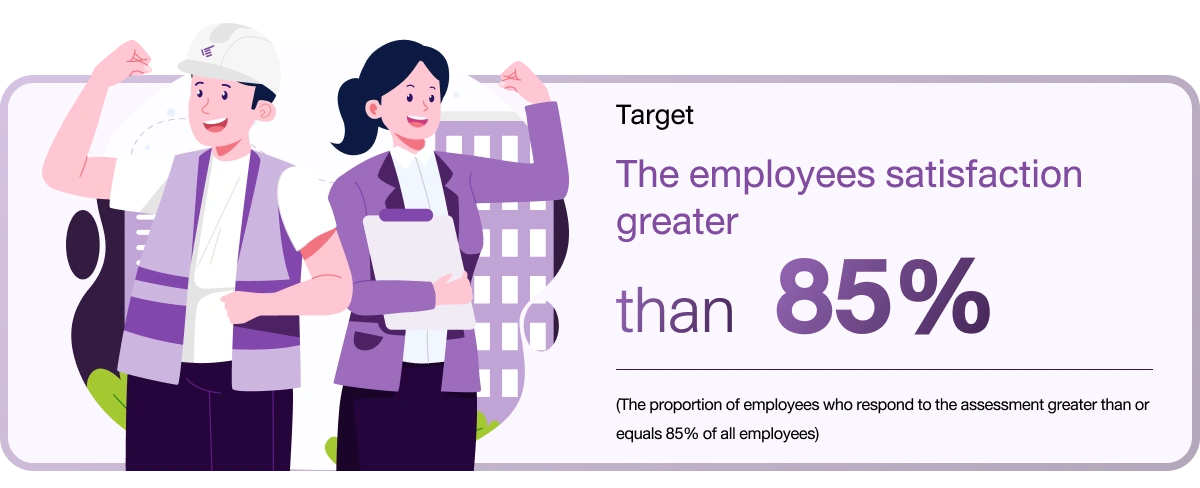
Performance of FY2025
The Company has conducted an annual survey of employees’ well-being and commitment to the organization and communicated the results of said survey to employees throughout the organization via email, Intranet and sustainability report, whereby the survey results are as follows:

The Company prioritizes the long-term development of employee quality of life and well-being (Employee Wellness Program) under its sustainability framework, focusing on creating a work environment conducive to physical and mental health (Happy Workplace), as well as strengthening organizational engagement through the design of health promotion activities accessible to and inclusive of employees at all levels.
In the year 2025, the Company continued to conduct employee well-being and engagement surveys to systematically gather feedback and assess satisfaction across various aspects of work. This year’s survey results fell below target due to decreased scores in certain dimensions compared to the previous year. However, the Company has analyzed employee feedback and developed appropriate action plans to respond to expectations and promote positive impacts on employee quality of life and well-being. Examples of implemented programs include:
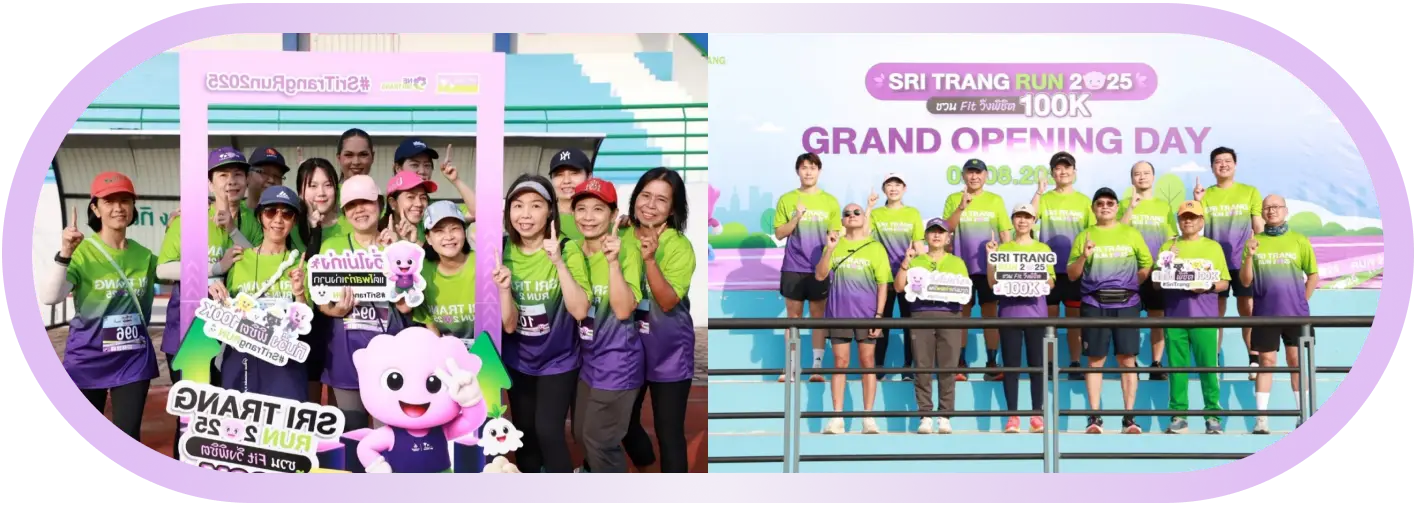
Physical Health Promotion Program: Sri Trang Run 2025 – Get Fit, Conquer 100K
This program was organized to promote a lifestyle emphasizing regular exercise and establish a sustainable organizational health culture, with participation from all subsidiaries within Sri Trang Group. The program was conducted in a Virtual Run format to reduce location and time constraints, allowing employees to exercise according to individual convenience, with a target distance of 100 kilometers per person within a specified timeframe.
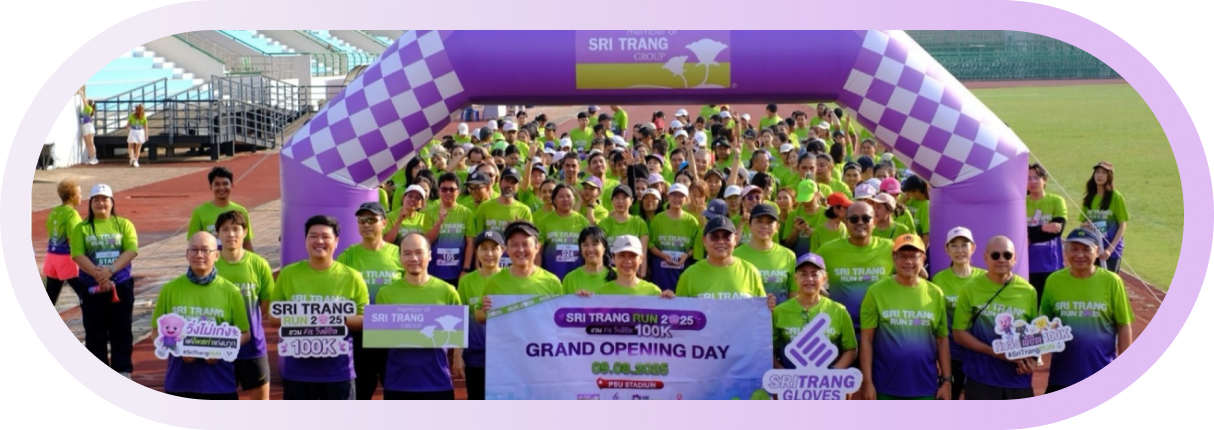

Program Results
- Employees registered for the program: 1,826 participants (91% of target)
- Employees who started accumulating distance: 1,370 participants (75% of registered participants)
- Employees who achieved the 100-kilometer goal: 842 participants (61.46% of active participants)
Beyond quantifiable physical health results, the program created significant positive impacts on workplace atmosphere and organizational engagement. Feedback surveys from program participants revealed that many employees cited exercising with colleagues as a key motivational factor for continuing activities consistently. The program also strengthened interpersonal relationships and team collaboration, resulting in a stronger and more widespread organizational wellness culture throughout the Company.
This physical health promotion program forms an essential part of the Company’s commitment to its corporate sustainability policy, particularly in the social dimension emphasizing long-term Shared Value Creation through investment in human capital and employee quality of life development. The Company has systematically integrated wellness programs into its human resource development strategy, covering multiple dimensions including promoting regular physical activity, providing health screening services based on individual risk factors for both physical and mental health, conducting training to build knowledge and understanding of good health maintenance, and utilizing health innovation and digital technology to effectively monitor and evaluate performance. The Company recognizes that employees with good well-being form the most critical foundation for building organizational competitiveness and long-term sustainable growth.
Mental Health Care Program: Mental Health Check-up 2025
This program systematically assessed employees’ mental health status, workplace well-being, and support needs to develop appropriate and effective support plans based on collected data.

Duration and Scope
- Duration: May - June 2025
- Scope: Covering factories and offices nationwide
- Implementers: Psychology specialists and psychiatrists
Participant Information
Number and Categories of Participants
- Total employee participants: 3,197 persons
- Male: 1,525 persons (48%)
- Female: 1,607 persons (50%)
- LGBTQ+: 54 persons (1.7%)
- Gender not specified: 11 persons (0.3%)
Program Results
The average Mental Well-being Score was 69.76 percentage, higher than the established standard threshold of 65%, reflecting that most employees have satisfactory well-being levels. However, 15.23% of employees were found to require additional care, and 3.60% were at a level requiring urgent consultation with specialists.
Regarding work ability and self-care, over 76.76 percentage of employees indicated they experienced no difficulties in performing their work. However, some reported experiencing problems in daily life that affected their work quality and overall mental health. In these cases, periodic follow-ups and ongoing counseling have been provided.
This mental health assessment program serves as an important tool enabling the organization to systematically understand employees’ mental health situations and use this data to plan long-term support tool development in areas including people development, welfare provision, and creating work environments that promote everyone's well-being. This program is therefore considered a crucial part of driving Sri Trang Group’s sustainability strategy in the "Social Sustainability" dimension and reflects the commitment to comprehensive and continuous personnel care.
Fair Compensation Management and Cost of Living Considerations
The Company establishes compensation structures by considering knowledge, capabilities, job responsibilities, performance results through Key Performance Indicators (KPI), labor market conditions, and industry benchmarking to ensure competitive and fair compensation for employees at all levels. Performance indicators for each unit are determined through committee review to verify the appropriateness of metrics and targets, without discrimination based on gender, age, race, religion, or any other status (GRI 2-19, 2-20).
Additionally, the Company recognizes the importance of cost of living in employees’ lives and incorporates national basic cost of living data as a factor in determining appropriate compensation aligned with economic conditions, inflation rates, and changing living costs. The Company sets basic wage rates in compliance with and above the legal minimum wage, along with additional compensation such as performance pay, attendance allowances, and other performance-based incentives to help reduce cost of living burdens and promote employees’ quality of life.
For executive compensation, the Company has relevant committees overseeing the determination of appropriate, transparent compensation aligned with roles, responsibilities, and company performance. Compensation is linked to both financial and sustainability performance to promote responsible management and support the organization's long-term sustainable growth.
In the year 2025, 100% of employees received a performance evaluation based on the Key Performance Indicators (KPIs) of each department, which regular reviews the performance and career development path (GRI 404-3).
In order to manage remuneration appropriately, the Company has conducted a survey on remuneration and welfare to compare with similar industries as well.
Average compensation ratio of female employees to male employees (By level)
Base salary only
Base salary + bonus and other cash incentives