Sustainable Supply Chain Management (GRI 3-3)
The Company focuses on sustainable supply chain management in accordance with international standards so that the Company’s partners operate in line with the Company’s sustainability practices, taking into account the management of environmental and social impacts, being ethical in conducting business, labor practices and fair trade, including in assessing risks, operating in accordance with human rights principles, giving attention to environmental impacts and business integrity starting from the fair and sustainable sourcing of raw materials to delivering the highest quality products to our customers.
Procurement and Treatment of Business Partners
The Company has a procurement policy, process and criteria for selecting business partners that are fair, transparent and auditable, which include avoidance of doing business with partners who offer any dishonest benefits, and strict adherence to the code of conduct toward business partners and competitors to prevent monopoly, unfair competition, corruption and promote new vendors. It emphasizes doing business with partners who share the same values as the Company in terms of social and environmental responsibility which require compliance with the guidelines on the method of controlling the procurement process of raw materials and services that specifies selection from the characteristics of products or services according to the needs of users, the appropriateness of the price, along with taking into account the potential environmental impact, focusing on green procurement, purchasing environmentally friendly equipment, energy-saving equipment with label number 5, reducing or stopping the use of substances that cause greenhouse gases, etc. In social dimensions, it emphasizes fair employment, non-use of child labor or forced labor, not violating human rights and promoting knowledge and understanding among partners regarding the shared value of social and environmental responsibility by applying the Supplier assessment form in the BSCI code of conduct, SMETA (Sedex Members Ethical Trade Audit) system that covers both social and environmental aspects to the annual assessment of major partners.
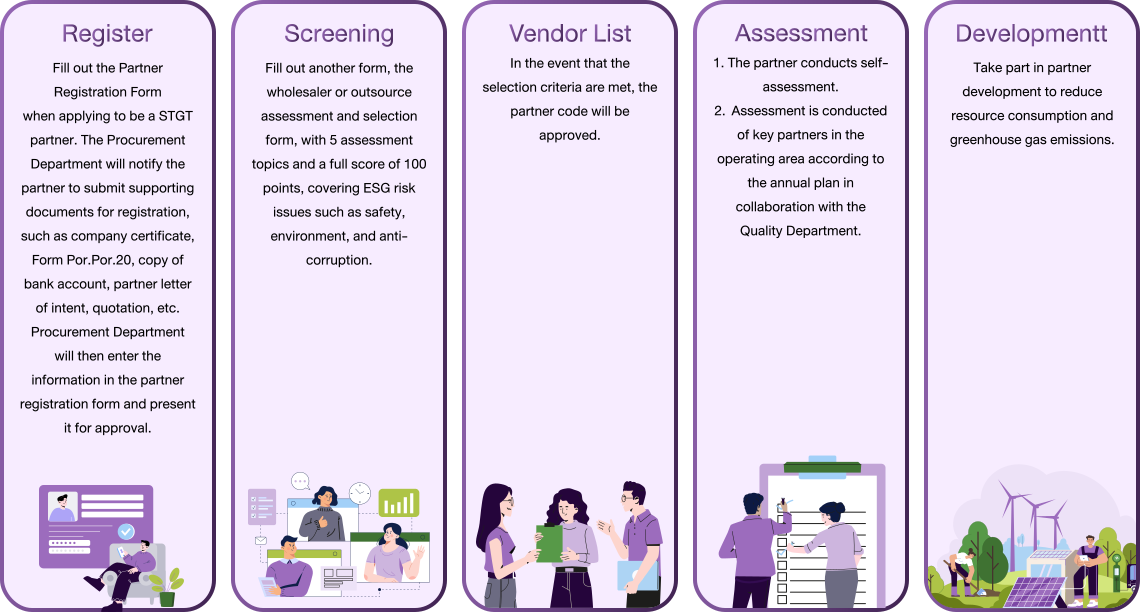
The Company prepared a Business Partner Code of Conduct and Guidelines to promote sustainable business operations among its business partners in accordance with the Company’s business practices. This code of conduct is also an opportunity for the Company and its business partners to embrace shared values and participate in social and environmental development to create growth and sustainability together. In this regard, the principles used in the preparation of the Business Partner Code of Conduct and Guidelines, in addition to the legal/regulatory requirements and the Company’s business ethics, are also based on internationally recognized charters and standards by such organizations as the International Labor Organization (ILO) and the United Nations Global Compact (UN Global Compact).
The guidelines for business partners are divided into 4 areas, summarized as follows

1. Good Corporate GovernanceThe Company operates its business fairly throughout the supply chain, with respect for intellectual property, commitment to anti-corruption, meeting requirements regarding delivery of products or services as well as managing economic, social and environmental risks, including the preparation of business continuity plans.

2. Labor and Human RightsThe Company has policies and practices in protecting against child labor, slave labor and forced labor, fair treatment of workers without discrimination, adherence to labor protection standards and respect for workers’ rights to freedom of association and participation in collective bargaining.

3. Occupational Health and SafetyThe Company attaches great importance to workplace safety and environment and, therefore, provides appropriate personal protective equipment, medical assistance and emergency preparedness training.

4. Environmental ProtectionThe Company complies with environmental laws and regulations as well as its commitments whereby it supports green operations, selection of Sustainable Materials, sustainable energy sourcing, considering impact factors and ecosystem diversity as well as the prevention of global warming and taking part in climate change mitigation. (The full version of the Business Partner Code of Conduct and Guidelines is disclosed in https://www.sritranggloves.com/en/documents/corporate-policy)
Supply Chain Risk Management
The Company has assessed the risks that may arise from key partners that may potentially affect the operations of the organization, thereby allowing for proper management. The Company has grouped key partners based on the following criteria
- Trading partner with high trading volume (divided by business group)
- Trading partner who supplies raw materials, products and provides services that are important to the Company’s business processes
- Trading partner whose number is likely to remain small in the future
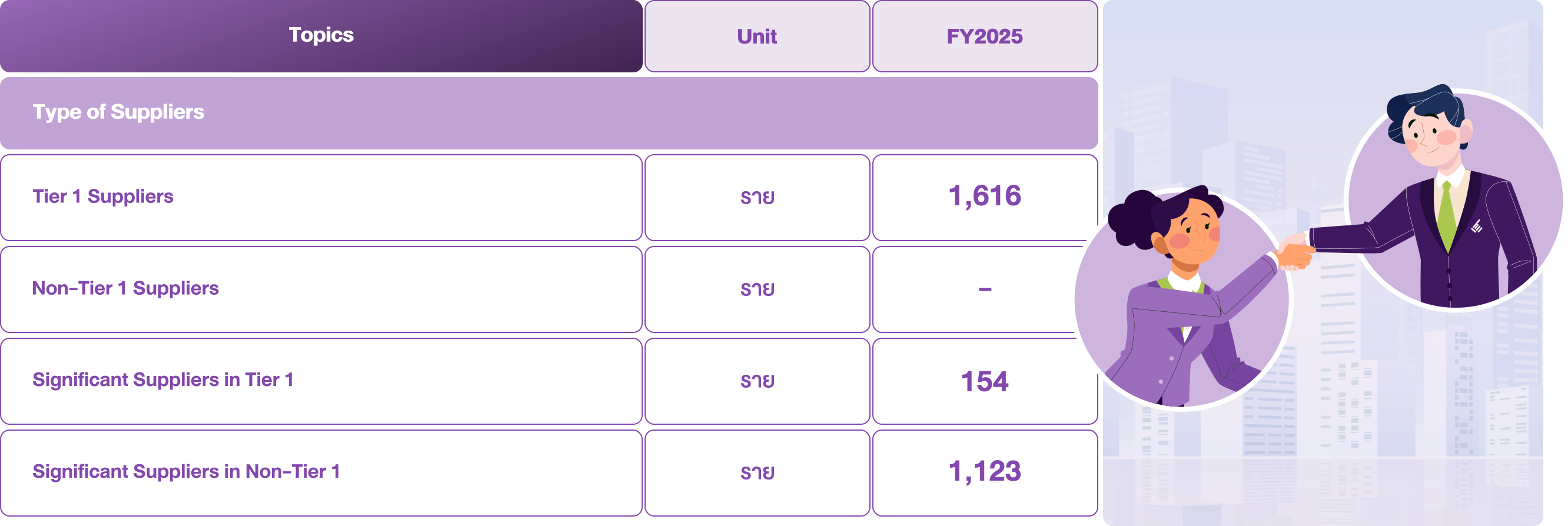
Based on the above criteria, major suppliers are divided into 2 main groups, namely raw materials and sub-contracting. In selecting trading partners, the Company evaluates and selects using comprehensive evaluation criteria in accordance with various standard systems that the Company has been certified such as BSCI, SMETA, ISO 14001, ISO 45001, ISO 22301, etc.
Regarding the EU Deforestation Regulation (EUDR) introduced by the European Union to reduce deforestation and address labor issues arising from the agricultural sector, the Company has already prepared its traceability system in readiness for compliance.
In addition, the Company has an annual audit of the quality management system of wholesalers and critical outsources, using the assessment form for auditing based on legal/regulatory requirements related to wholesalers such as ISO 9001, ISO 13485, ISO/IEC 17025, ISO 14001,ISO 45001,ISO 22000, BSCI Code of Conduct & SMETA, GMP, Halal and other relevant standards which cover environmental, social and governance aspects, including business continuity management. The frequency of auditing is at least once every 2 years, both auditing by the responsible corporate department and self-assessment by the trading partner. However, for the Critical Outsource group, which directly impacts product quality and manufacturing processes, the Company mandates onsite audits at least once annually. This ensures that business partners operate in accordance with the Company’s established standards and requirements. The Quality System Department coordinates meetings with relevant departments to review and select the list of suppliers to be audited each year. A systematic audit plan is then developed with clearly defined timeframes, and on-site assessments are conducted at partner facilities according to the scheduled plan. The Quality System Department evaluates partner performance using Spider Chart Analysis, which provides a clear overview of assessment results across multiple dimensions. The assessment results are analyzed to identify strengths and appropriate development opportunities, followed by the development of improvement plans in collaboration with partners and continuous progress monitoring.
Regarding transparency in the procurement system, the Company maintains internal audit and risk assessment systems to identify potential corruption risks. When lack of transparency or fraudulent activities are discovered, disciplinary action is taken against employees in accordance with Company regulations, and a blacklist system is applied to the respective business partners. In 2025, the number of suppliers with corrective action plans out of the total number of suppliers assessed as having significant actual or potential negative impacts was 0 suppliers.
Target
Performance of FY2025 (GRI 308-1, 308-2)
| Topics | Unit | FY2025 |
|---|---|---|
| Suppliers signed the agreement to demonstrate their intent for anti-corruption (accumulate) | case | 2,399 |
| Suppliers signed the agreement to demonstrate their intent for anti-corruption | case | 395 |
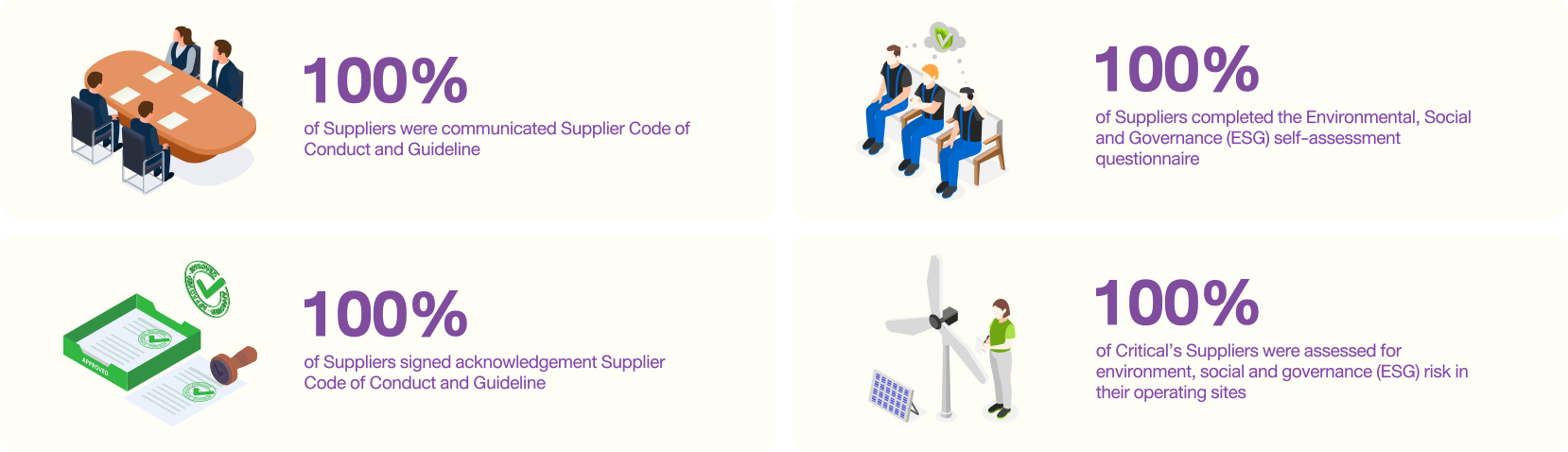
| Suppliers were communicated Supplier Code of Conduct and Guideline | percentage | 100 |
| Suppliers signed acknowledgement Supplier Code of Conduct and Guideline | percentage | 100 |
| Suppliers completed the Environmental, Social and Governance (ESG) self-assessment questionnaire | percentage | 100 |
| Critical’s Suppliers were assessed for environment, social and governance (ESG) risk in their operating sites | percentage | 100 |
| New partners who have passed the Company’s sustainability screening | case | 14 |
In 2025 the results of the environmental, social, and governance (ESG) self-assessment from suppliers and the ESG risk assessment in the operation areas found “no risk”.
| Topics | Unit | FY2025 |
|---|---|---|
| Total local purchasing value of goods and services | Million Baht | 17,891 |
| Local purchasing value of goods and services | Million Baht | 1,147 |
| Proportion of local purchasing value of goods and services | percentage | 6.41 |
| Local purchasing value of goods and services (including Latex) | Million Baht | 11,627 |
| Proportion of local purchasing value of goods and services (including Latex) | percentage | 64.99 |
Partnership development
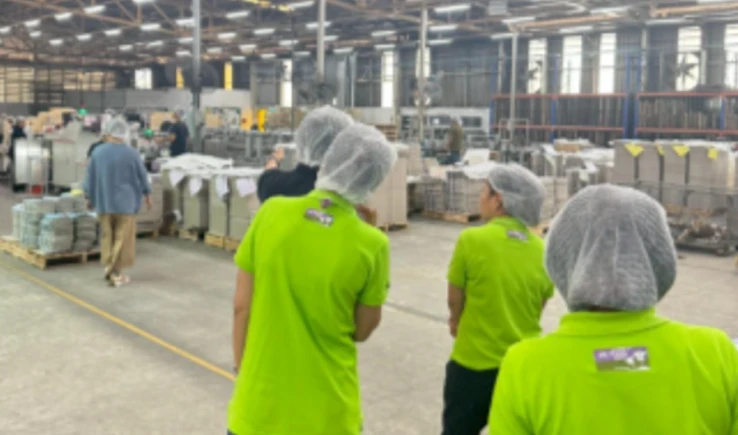
The Company places great emphasis on sharing knowledge, developing potential and enhancing the ability of trade partners’ manufacturing and service to meet desired standards. The Company also focuses on clarifying and supervising trade partners to respect human rights and treat their own workers fairly, to be committed to social and environmental responsibility through communication, annual contractor training, study visits, meetings with partners and annual supplier audits with the objective to provide advice, collaboration in problem solving, developing the quality of raw materials and delivery to meet the needs of the Company, including cooperation in sourcing sustainable materials or implement projects/activities to reduce the use of resources as well as conduct annual audits to develop sustainable business operations.
Packaging
Each year, the Company uses a large amount of packaging to contain its products, and customer needs are becoming more diverse. Therefore, in order to effectively meet customer demand, the Company must hold discussions with vendors to develop knowledge and update information on packaging trends, as well as analyze and solve packaging problems encountered each year in order to obtain quality packaging as desired by customers.The Company’s activities in collaboration with packaging vendors include:
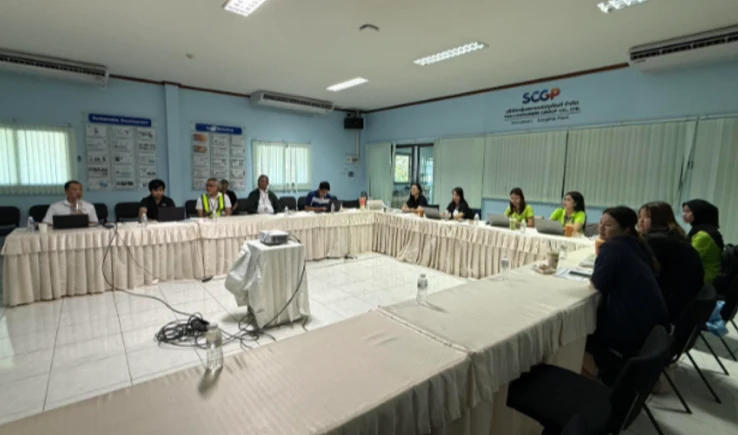
- The Company holds regular meetings to develop and update packaging information to effectively meet customer needs.
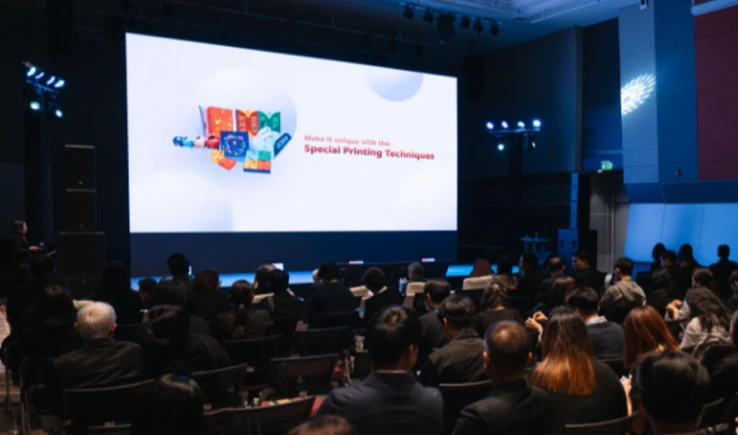
- The Company participates in packaging knowledge seminars organized by suppliers to enhance knowledge and stay updated on packaging production technology developments and emerging trends.
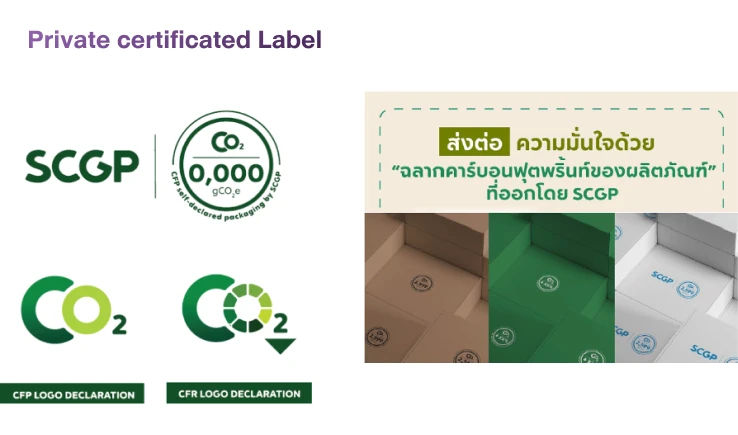
- The Company attended an academic seminar on packaging innovation organized by business partners to track advances in production technology and packaging development trends aligned with Environmental, Social, and Governance (ESG) principles. Partners presented the development of carbon footprint certification labels that can be printed on packaging to display the amount of carbon dioxide emissions generated during the production process, thereby building customer confidence and demonstrating the Company’s environmental responsibility.
Furthermore, the Company promotes the use of dark brown paper made from 100% recycled pulp for outer packaging production, which reduces the use of natural raw materials and helps conserve forest resources. This aligns with the Company’s environmental goals of reducing ecological impact and promoting the circular economy.

In the year 2025, the Company continued to organize the Eco-friendly Recyclable Box Project with packaging manufacturers, continuing from the previous year. Details are as follows:
The environmentally friendly circular box project
Normally, the suppliers must pack a inner box (Dispenser) into a outer box/brown paper box (Carton); ("reusable box"). Upon use of the dispenser boxes, relevant departments will collect and return the reusable boxes to the suppliers for repacking dispenser and distribute to our Company.
Performance
- From the year 2025 delivery of the product, if the reusable boxes is removed without reuse, the packaging suppliers will need to use paper to produce the boxes approximately 1,569,554 pieces or equivalent to the weight of paper that must be used in the production of approximately 449 tons.
- From sending the reusable boxes back to the suppliers for repacking dispenser, the packaging suppliers can reduce the amount of the outer boxes/brown paper boxes (Carton) with the amount of 784,777 pieces or equivalent to the weight of paper that must be used in the production of approximately 225 tons.
In summary, the Revolving Box project was able to help reduce the
Company’s use of paper by up to 224 tons/year
Results of the Project
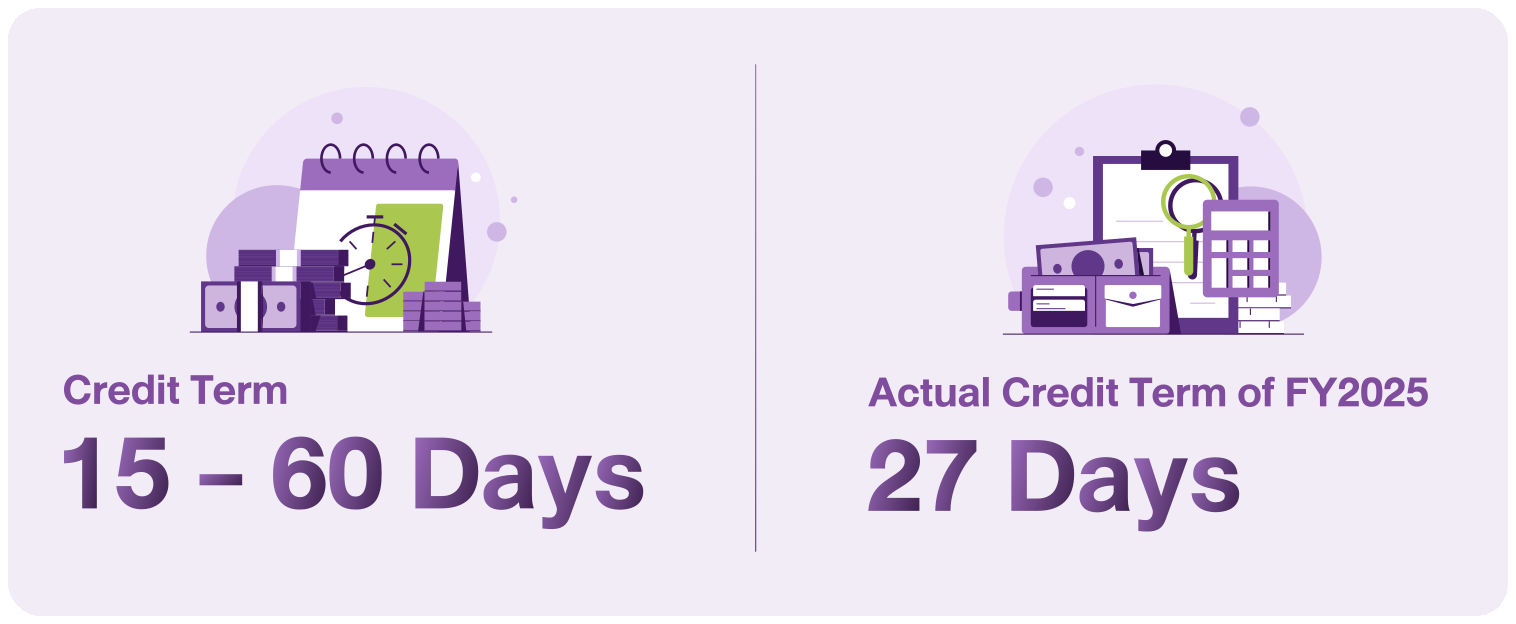
Remark: Emission Factor = 1.6184 kilograms of carbon dioxide equivalent/kilogram (Reference: https://thaicarbonlabel.tgo.or.th/index.php?lang=EN&mod=Y0hKdlpIVmpkSE5mWlcxcGMzTnBiMjQ9)Credit Term with Suppliers
The Company values the sustainable growth of business with stakeholders throughout its supply chain. The business terms and conditions must reflect the corporate governance that each supplier is complied with, as well as the quality of products/services under agreed timeline and the responsiveness of communication and collaborative business development with the Company. The credit terms with any suppliers will be based on abovementioned considerations which incorporate the Company’s creditworthiness, as well as proper liquidity management of both parties. In general, our credit terms with key suppliers are in a range of15 – 60 days.